
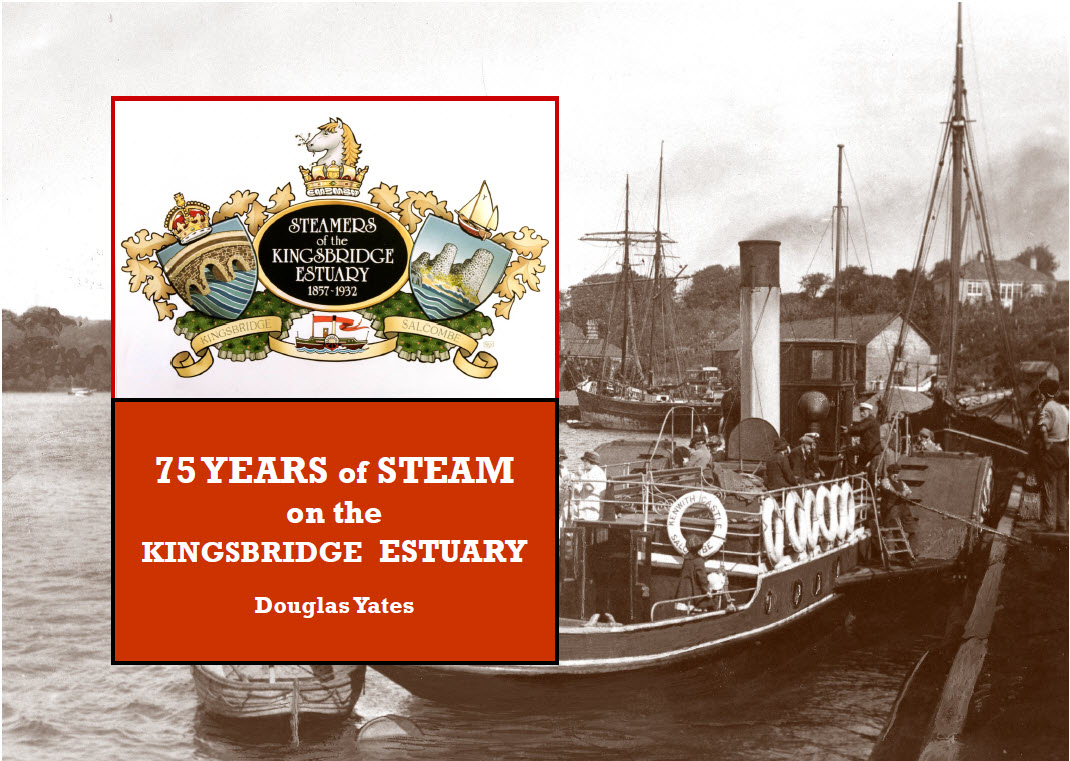
Douglas Yates A.R.C.A. Published by Proteus Print. 128 pp, 8 x 12 ins, £18.99, available from Harbour Bookshop, Kingsbridge and Douglas Yates’ website (see below)
70 archive photos, and 18 coloured architectural drawings of key vessels and numerous illustrations of local life and stories, all by the author.
This book is the culmination of 30 years’ research into illustrations, photographs and drawings of estuary steam vessels, and is a most welcome addition to the maritime and social history of the South West. The author’s training and qualification as an artist shines through the selection of vintage photographs, the magnificent, full page, coloured architectural drawings of the principal vessels, and his drawings of local life and incidents in the Kingsbridge estuary during the 75 years from 1857 to 1932.
The book aims to show how the steamer transformed the local economy, and became an essential part of people’s lives there. Until 1857, goods reached Kingsbridge from Plymouth by sea, since the local roads were poor and costs were expensive, but the local sailing vessels were obviously at the mercy of the tides and the weather and were therefore unpredictable and unreliable. So, in 1857, a local business launched a cooperative with 32 fellow tradesmen: the Kingswear Steam Packet Company. It offered a regular, twice weekly service between Kingsbridge, Salcombe and Sutton Harbour in Plymouth, taking between 2-3 hours in most reasonable weather. The service was immediately popular and Kingsbridge benefitted from a better supply of sought after household goods and foods, such as sugar, soap, molasses, and coffee, as well as the heavier bulk cargoes like coal and guano. In time the company advertised occasional day cruise excursions to the estuary, bringing visitors and their spending to Salcombe and Kingsbridge for the day.
The book is structured around the 12 steamers that ran commercial services over the 75 years, with detailed, coloured line drawings and vintage photos of each vessel, together with their crew and passengers. The steamer’s technical specifications are recorded and the design evolution highlighted, moving from wooden paddle steamers to steel hulls and the introduction of single screw power in the 20th century.
Notable events, accidents, collisions and rescues are interspersed through the chronological descriptions of the ships, all told in the words of the original newspaper reports and illustrated by the author with hand drawings. The impact of national events is described, such as the conversion of the Salcombe Castle to a supply vessel in 1914, when she moved to Plymouth to service the fleet there. In addition the evolution of regional transportation is covered with drawings and descriptions of the arrival of the Great Western Railway’s Primrose Line in 1893, and the motor carriage in 1909, which had a fundamental impact on the social life of the estuary, as well as contributing to the eventual demise of the steamers in 1932.
Douglas Yates has created a book with the detail required for a reference book on this topic, but tells the story with approachable prose and a combination of illustration that is truly remarkable. In all there are 18 full page coloured line drawings (mainly of the steamers), 70 or so black and white photos and a vivid selection of the author’s own drawings of Victorian life in the estuary.
Jonathan Turner
http://mordics-press.square.site/
Harbour Bookshop, Kingsbridge: https://www.harbourbookshop.co.uk/